





It’s wise to avoid debt as best you can. Sometimes that’s simply not practical, though. Even for people in good financial standing, it’s often not realistic to buy a home without a mortgage or go to college without a student loan. These types of debt are not only frequently necessary, they’re beneficial. It might be better to think of them as investments rather than debt.
Credit card debt? That’s another story.
Credit cards
Back in the day, there was a line of thought that credit cards were, on the whole, bad. After all, they represent debt, so why would you want something that tempts you to spend more money than you have?
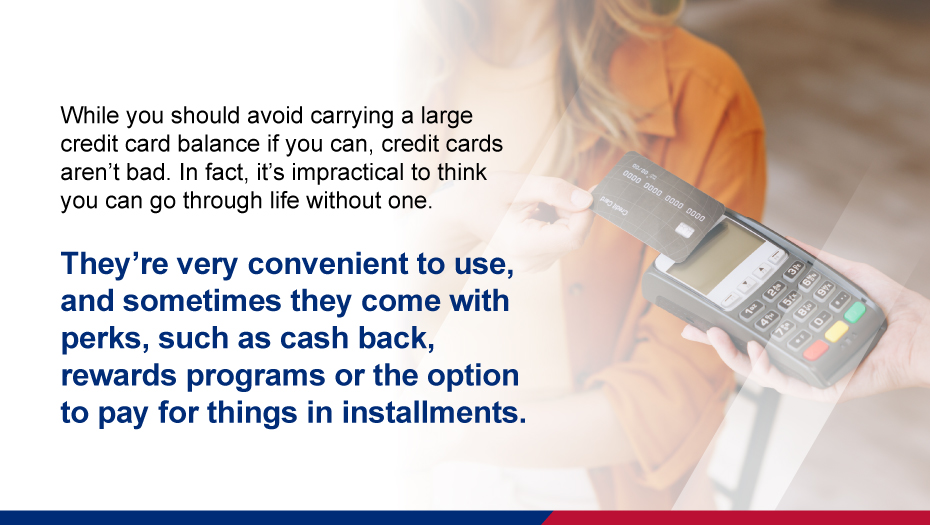
While you should avoid carrying a large credit card balance if you can, credit cards aren’t bad. In fact, it’s impractical to think you go through life without one. They’re very convenient to use, and sometimes they come with perks, such as cash back, rewards programs or the option to pay for things in installments.
How To Use a Credit Card Responsibly?
Through overspending or other types of financial mismanagement, some people get into trouble with their credit cards. Here’s what you can do to avoid a negative situation:
Don’t Just Make the Minimum Monthly Payments
You must pay off some of your credit card balance every month. On your credit card statement or with your account information on your bank’s website or app, there will be a number indicating the minimum payment you’re obliged to make that month.
As with most things in life, doing the bare minimum isn’t the way to get ahead. If you only pay the minimum, interest will continue to grow on your balance, meaning you’ll have to pay more in the long run.
Pay Off the Entire Balance if You Can
If you have the money to pay off your entire credit card balance, do it. This means no more interest will accrue on what you owe, because you won’t owe anything.
Take a Break if You Need To
If you’re trying to reduce your spending or just understand your spending habits better, consider switching to cash. People often find they can track their spending better when they use banknotes.
Create — and Follow — a Budget
Whether you pay with cash or card, drawing up a budget that takes into account what you earn and all your financial obligations will help you spend responsibly.