






Financial literacy empowers you to make informed decisions about your money, helping build a life of stability and success. Whether it's managing daily expenses, saving for the future or investing in your career, this knowledge helps you make choices that align with your goals and values.
Enhancing Your Financial Literacy: 5 Essential Tips
Enhance your financial literacy with five tips to help you manage, save and protect your money.
Tip #1: Understanding Your Income
Gross income is the total amount you earn before any deductions, such as taxes or retirement contributions, are taken out. Net income, on the other hand, is what you actually take home after all deductions have been made.
It’s crucial to understand this distinction because it affects how you calculate your expenses and savings. Many financial missteps can be avoided by simply basing your financial plans on your net income, ensuring that you live within your means.
Tip #2: Creating (and Following) a Budget
A budget is a plan that helps you prioritize your spending and manage your money — no matter how much or how little you have. The key to successful budgeting is setting realistic goals and sticking to them.
Review your budget regularly and adjust it as your financial situation changes. One effective strategy is to use the envelope system, where you allocate a certain amount of cash for different spending categories. When the cash is gone, you’re done spending in that category. It's also helpful to set specific financial goals and use your budget to help you reach them.
Tip #3: Saving vs. Investing
Saving typically involves putting money somewhere safe, like a savings account, where it’s easily accessible and protected from market fluctuations. This is great for short-term goals or emergencies.
Investing, however, is about purchasing assets that you believe will increase in value over time. Investments carry more risk, but they can also create high rewards. Generally, the higher the potential return of an investment, the higher the risk.
It's important to understand your personal risk tolerance and investment objectives when making decisions. Maybe you prefer lower-risk, lower-return investments — or maybe you’re willing to take on more risk for the possibility of greater rewards.
Tip #4: Managing Debt
Good debt is an investment that will grow in value or generate long-term income, such as taking out a mortgage to buy a home or borrowing money for education. Bad debt involves borrowing money for depreciating assets or items that don’t provide a return. Both are considered “credit” and impact your credit score.
Using this credit wisely involves:
- Understanding how much credit you can afford.
- Using it for financially sound purchases.
- Knowing how to manage your credit utilization ratio.
But even the best-used credit still needs to be paid off. What’s the best approach? One popular method is the debt snowball strategy, where you pay off debts in order of smallest to largest, gaining momentum as each balance is paid off. Another approach is the debt avalanche method, where you focus on paying off the debt with the highest interest rate first.
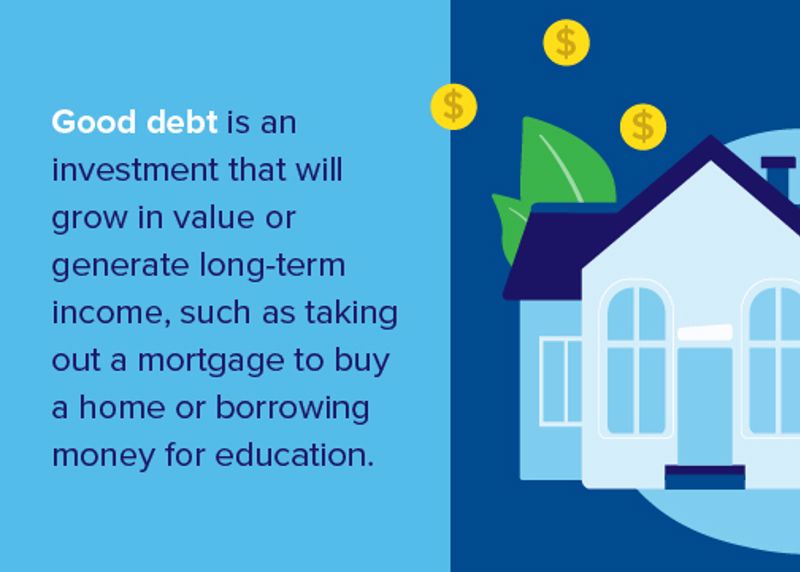
What is the difference between good debt and bad debt?
Tip #5: Protecting Your Finances
There are lots of ways to keep your money safe:
- Insurance: Health, auto, life and homeowner’s insurance can protect against big financial losses.
- Identity monitoring: Be vigilant about sharing personal information, monitor financial accounts regularly and be aware of common scams to avoid fraudulent charges and potentially long-term credit damage.
- Emergency funds: This reserve provides financial support during emergencies like unemployment, preventing you from having to rely on high-interest credit. The Consumer Financial Protection Bureau says that this amount should be based on patterns in your living expenses.
Want to boost your financial literacy and do more to protect your money? Contact a Vectra Bank professional today.
Content is offered for informational purposes only and should not be construed as tax, legal, financial or business advice. Please contact a professional about your specific needs and advice. Content may contain trademarks or trade names owned by parties who are not affiliated with Zions Bancorporation, N.A. Use of such marks does not imply any sponsorship by or affiliation with third parties, and Zions Bancorporation, N.A. does not claim any ownership of or make representations about products and services offered under or associated with such marks.