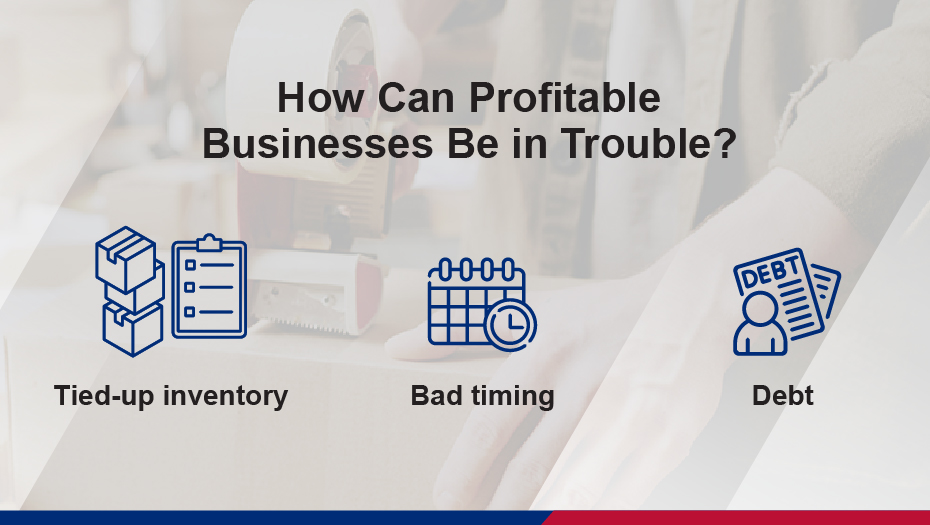






Running a business is hard work. Running it well enough to earn a profit is even harder. So, knowing that your business can be profitable and still somehow be broke might be discouraging. But if you understand how business finance works, you can putyour organization in a good position to succeed.
What’s the Difference Between Cash Flow and Profit?
Cash flow and profit are not the same thing. A business’s profit is how much money is left over after deducting expenses from revenue. An organization’s cash flow is the actual movement of money in and out of a business bank account. In fact, a profitable company can still fail if its cash is inaccessible.
Let’s get into these definitions in a little more detail.
What Is Cash Flow?
An organization’s cash flow is the net balance of cash moving in and out at a specific point in time. For most businesses, cash is constantly moving. When a business buys inventory, for example, money flows out toward its suppliers. When that business then sells inventory, cash flows in from its customers.
And there are less obvious examples, such as utilities and taxes representing outflow, and customer payment installment plans representing inflow. Positive cash flow means an organization has more money moving in than out, and negative cash flow means the opposite.
What Is Profit?
Profit is the balance that remains when a business deducts all its expenses from its revenues. If revenue is greater than expenses, then a company turns a profit. If not, it’s “in the red,” meaning it owes more than it makes.
A business can distribute profits to its owners and shareholders, often as dividend payments. Or a company can reinvest profits back into itself, such as for research and development, or to expand its workforce or locations.